
Trending HOT TOPICS

Get the latest Tech Insights in your inbox.

No spam, just pure technology news twice a week.

Inside The World Of

Space Tech

View All Space Tech
Pic
Featured

James Webb Space Telescope Discovers One of the Most Distant Galaxies Ever Seen

Pushing the boundaries of the observable universe to the very edge of the "Cosmic Dawn," the James Webb Space Telescope (JWST) has officially confirmed the discovery of a galaxy existing only 290 million years after the Big Bang. The galaxy, designated JADES-GS-z14-0, represents a paradigm shift in cosmology, proving that massive, luminous structures formed far more rapidly and efficiently than previously predicted by standard models of the early universe. The Redshift Record: Breaking the 14 Barrier The discovery was made as part of the JWST Advanced Deep Extragalactic Survey (JADES). Utilizing the Near-Infrared Spectrograph (NIRSpec), astronomers measured a spectroscopic redshift of z ≈ 14.32. In the language of cosmology, this redshift indicates that the light from this galaxy has been stretching through the expanding universe for over 13.5 billion years. To put this in perspective, the previous record-holder, JADES-GS-z13-0, existed roughly 325 million years after the Big Bang. This new discovery pushes our reach back another 35 million years, a critical window during which the first stars were beginning to reionize the primordial hydrogen fog. "Unexpectedly Bright": Challenging Galaxy Evolution The most startling feature of JADES-GS-z14-0 is not just its distance, but its luminosity. According to the "Standard Model" of cosmology (ΛCDM), galaxies that early in time should be small, dim, and composed of pristine hydrogen and helium. However, JADES-GS-z14-0 is remarkably bright and spans over 1,600 light-years in diameter. "The sheer amount of starlight we are seeing suggests that the galaxy is hundreds of millions of times the mass of the Sun," noted a lead researcher at the Space Telescope Science Institute (STScI). "This implies that the universe was able to concentrate matter and ignite star formation on a much faster timescale than our simulations suggested. It forces us to ask: How did so much mass gather so quickly?" The Oxygen Signature: The Legacy of First-Generation Stars Perhaps the most significant finding from the NIRSpec data is the detection of ionized oxygen. For oxygen to exist, an entire previous generation of "Population III" stars must have already lived, died, and exploded as supernovae to seed the surrounding gas with heavy elements. Finding oxygen at z ≈ 14.32 suggests that JADES-GS-z14-0 is not a "first-light" object, but rather a second or third-generation system. This discovery implies that the very first stars likely ignited within the first 100 to 200 million years of the universe—much earlier than the 300–400 million-year window researchers had traditionally favored. The Future of Deep-Space Surveying The discovery of JADES-GS-z14-0 confirms that JWST is operating at its peak potential, effectively acting as a "time machine" that can peer into the dark ages of the cosmos. As we move through 2026, astronomers are recalibrating their search parameters to look for even higher redshifts, with some theorists now predicting that galaxies could be found as far back as z ≈ 20. As the data from the JADES survey continues to be processed, JADES-GS-z14-0 stands as a monument to human curiosity—a distant, glowing island of stars that existed when the universe was less than 2% of its current age, fundamentally altering our map of cosmic history. JWST Discovery Metrics: • Designation: JADES-GS-z14-0. • Redshift: z = 14.32. • Time Post-Big Bang: ≈ 290 million years. • Primary Instrument: NIRSpec (Near-Infrared Spectrograph). • Key Finding: Detection of oxygen and high intrinsic luminosity in the early universe. • Implication: Galaxy formation was more efficient and occurred earlier than ΛCDM models predicted. Visit NASA To Read More References: Space.com | NASA | Astrobites Image Source: NASA

Inside The World Of

Robotics

View All Robotics
Pic
Featured

Ameca — Can Humanoid Robots Help Combat Loneliness?

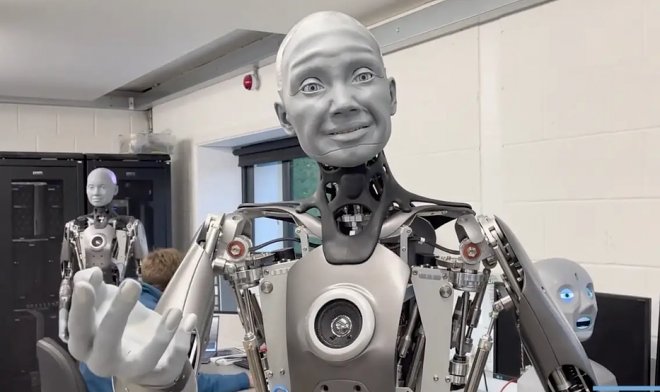
As the world’s population ages, loneliness among the elderly is becoming a growing concern. Now, humanoid robots like Ameca are being explored as part of a new solution—combining advanced robotics with emotional interaction to provide companionship and support. A Response to a Growing Problem Loneliness among older adults has been linked to serious health risks, including depression, cognitive decline, and even heart disease. In many parts of the world, families are becoming smaller and more geographically dispersed, leaving many elderly individuals without consistent social interaction. This has created a need for innovative solutions that go beyond traditional caregiving. A Robot That Feels… Human Developed by Engineered Arts, Ameca is designed to interact with humans in a remarkably natural way. What sets it apart is its ability to mimic human facial expressions and emotions with high precision. Through advanced motors and AI-driven systems, Ameca can smile, frown, show surprise, and maintain eye contact—creating a sense of presence that feels more human than mechanical. This capability allows Ameca to engage in conversations that are not just functional, but emotionally responsive. For elderly individuals, this can make interactions feel more meaningful, helping reduce feelings of isolation. Beyond Companionship While Ameca is not yet widely deployed in homes, its potential applications are being explored in healthcare and assisted living environments. The robot could: • Provide reminders for medication • Offer conversational engagement • Assist caregivers by monitoring well-being Its presence could help bridge the gap between human care and technological support, especially in regions facing shortages of healthcare workers. The Human Question Despite its promise, the idea of robots providing emotional companionship raises important questions. Can machines truly replace human connection? Some experts argue that while robots like Ameca can reduce loneliness, they should complement—not replace—human relationships. There are also concerns about emotional dependency and the ethical implications of machines simulating feelings they do not actually experience. A Glimpse into the Future The development of robots like Ameca reflects a broader shift in how technology is being used—not just for productivity, but for emotional and social support. As AI and robotics continue to advance, the line between human interaction and machine assistance is becoming increasingly blurred. Pi Insight Ameca does not feel—but it can make people feel less alone. In a world where loneliness is rising, the question is not just what technology can do, but how it can support the human need for connection without replacing it. Image Source: Maker Fiare Rome | Engineered Arts

Inside The World Of

Artificial Intelligence

View All Artificial Intelligence
Pic
Featured

Google Begins Transition from Chromebook to “Googlebook”

Google has officially introduced a new generation of AI-focused laptops called Googlebook, signaling the beginning of a major transition away from the long-running Chromebook brand after more than 15 years. The new Googlebook platform was unveiled during Google’s Android Show ahead of Google I/O 2026 and represents a broader shift in the company’s strategy toward AI-native computing. Unlike traditional Chromebooks, which were built primarily around web browsing and cloud services, Googlebooks are designed with deep integration of Gemini AI at the core of the operating system. Built Around AI Googlebook laptops will reportedly run on a new operating system built from a fusion of Android and ChromeOS technologies. Internally referred to as “Aluminium OS,” the platform focuses heavily on AI-assisted workflows, smarter multitasking, and tighter integration with Android devices. One of the standout features is the “Magic Pointer,” an AI-powered cursor system capable of offering contextual suggestions based on what users are pointing at on-screen. Google also showcased AI-generated widgets powered by Gemini that can automatically organize information from apps like Gmail, Calendar, and Drive into personalized dashboards. A Shift Beyond the Chromebook Era Chromebooks became widely popular in education and budget computing due to their simplicity, affordability, and cloud-based design. However, the computing landscape has changed dramatically since their launch in 2011. Competitors such as Apple and Microsoft have increasingly focused on AI-powered systems, pushing Google to rethink its laptop ecosystem. Googlebooks are expected to target a more premium market segment while still maintaining compatibility with Android apps and web-based services. Major manufacturers including Acer, ASUS, Dell, HP, and Lenovo are already preparing Googlebook devices for launch later this year. Chromebooks Are Not Disappearing Overnight Despite the transition, Google has clarified that Chromebooks will continue receiving support and updates under their existing support timelines. Some newer Chromebook models may even be eligible to transition into aspects of the Googlebook experience over time. The move appears to be a gradual evolution rather than an immediate shutdown of ChromeOS devices. Why It Matters The launch of Googlebook reflects a growing transformation in personal computing. The focus is shifting from operating systems centered on apps and browsers toward systems built around artificial intelligence as a core experience. Rather than simply opening programs, future computers may increasingly: • Understand context • Anticipate user needs • Generate content dynamically • Interact more naturally with users Pi Insight: Chromebooks helped define cloud computing for a generation. Googlebook may now attempt to define the next era—where AI is no longer an assistant added to the computer, but the foundation of the computer itself. Visit ZDNET To Read More Image Source: ZDNET

Inside The World Of

Industry

View All Industry
Pic
Featured

Asus ZenBook Duo has officially moved dual full-size OLED laptop

For decades, the laptop form factor was defined by a single hinge and a single display. In 2026, that blueprint has officially been retired. Asus has announced that its flagship ZenBook Duo line has moved exclusively to a dual full-size OLED configuration, signaling the end of the "experimental" phase for dual-screen computing. By replacing the physical keyboard deck with a second 14-inch Lumina OLED panel, Asus has successfully transformed the mobile workstation into a modular "command center" that adapts to the user’s environment in real-time. The Death of the 'ScreenPad Plus' The move to dual full-size displays marks a clean break from the "ScreenPad Plus" era of the early 2020s, which featured a cramped, half-height secondary screen. The 2026 ZenBook Duo utilizes two identical OLED panels with 120 Hz refresh rates, offering a combined $19.8$ inches of vertical workspace when opened in "Desktop Mode." This transition is powered by a new high-cycle "Titanium Link" hinge, which Asus claims can withstand 100,000 folds—effectively outlasting the typical five-year lifecycle of a professional laptop. Modularity: The Detachable Advantage Central to the 2026 design is the refined detachable Bluetooth keyboard. When placed on top of the lower screen, the device functions as a traditional 14-inch laptop. However, when the keyboard is removed, the device reveals its true potential. • Dual-Screen Mode: Stacked vertically for long-form coding or document editing. • Desktop Mode: Opened like a book, providing side-by-side 4:3 workspaces for research and content creation. Sharing Mode: The hinge allows a full 180-degree lay-flat position, with software that automatically flips the top display to face a person sitting across the table. AI-Driven Workspace Management To manage the massive increase in digital real estate, the ZenBook Duo utilizes an "Intelligent Window Manager" powered by the latest NPU-heavy silicon. The OS now recognizes "Focus Gestures"—for example, a five-finger tap on the lower screen instantly summons a virtual haptic keyboard, while a three-finger swipe sends an active window to the "Preview Pane" on the upper display. This AI-driven orchestration ensures that the transition between hardware modes is seamless, solving the "software friction" that plagued early multi-screen attempts. The Ergonomic Mandate: Reducing "Tab Fatigue" Productivity metrics for 2026 suggest that dual-screen users experience an increase in task efficiency compared to single-screen users. By eliminating "Tab Fatigue"—the mental load required to constantly switch between hidden windows—the ZenBook Duo has become the preferred choice for data analysts, video editors, and executive-level professionals. The device effectively brings the "multi-monitor office setup" into the coffee shop, the airplane tray table, and the remote workspace. Competition and the Foldable Threat While Asus currently leads the dual-panel market, the ZenBook Duo faces stiff competition from the burgeoning "Foldable OLED" sector. However, Asus has positioned the Duo as the "reliable" alternative. By using two separate glass-protected panels instead of a single folding plastic screen, the Duo maintains superior scratch resistance and a more affordable price point. In the 2026 landscape, the ZenBook Duo represents the "Structural Evolution" of the laptop—a device that acknowledges that in the age of AI and massive data streams, one screen is simply no longer enough. ZenBook Duo 2026 Specifications: • Display: Dual 14-inch Lumina OLED; 120 Hz. • Hinge: 180-degree "Titanium Link" with integrated cooling vents. • Input: Detachable full-size haptic keyboard + level pressure stylus. • Performance: Intel Core Ultra "Lunar Lake" / AMD Ryzen AI 400 Series. • Weight: 1.35 kg (excluding keyboard); 1.65 kg (total travel weight). Visit ASUS Pressroom to Read More Image Source: ASUS

Inside The World Of

Energy

View All Energy
Pic
Featured

Breakthrough in Clean Energy — Tapping the Earth for Power. Geothermal Energy Might Be Our Best Bet

Breakthrough Energy, backed by Bill Gates, is pushing forward a major advancement in clean energy through next-generation geothermal technology—an approach that could provide reliable, zero-emission power by harnessing heat from beneath the Earth’s surface. Unlike solar and wind, which depend on weather conditions, geothermal energy offers a constant and stable source of power. The concept is simple in theory: by drilling deep into the Earth’s crust, companies can access extremely high temperatures and convert that heat into electricity. What is changing now is the technology—new drilling methods are making it possible to reach deeper, hotter regions that were previously inaccessible or too expensive to explore. Companies supported by Breakthrough Energy are developing advanced drilling systems capable of operating in extreme underground conditions. These innovations are expected to unlock geothermal energy at a much larger scale, potentially making it available in regions that previously could not benefit from it. The timing of this breakthrough is critical. Global energy demand is rising rapidly, driven by population growth, industrial expansion, and the increasing use of artificial intelligence and data centers. Many projections suggest that the world could require up to three times its current energy supply by 2030, putting pressure on existing energy systems to scale quickly while reducing carbon emissions. This is where advanced geothermal stands out. It provides continuous, clean energy without the intermittency issues of renewables like solar and wind, and without the emissions associated with fossil fuels. If successfully scaled, it could become a key pillar in the global transition to sustainable energy. However, challenges remain. Deep drilling is expensive, technically complex, and requires significant infrastructure investment. There are also concerns around environmental impact and economic feasibility at scale. Despite this, growing investment from both private organizations and governments suggests strong confidence in its long-term potential. This development signals a broader shift in how the world is approaching energy. Rather than relying solely on surface-level solutions, attention is now turning underground—toward a vast, largely untapped source of power that could reshape the future of global energy. Image Source: The Economic Times | EnergyExcursions

Inside The World Of

Biotechnology

View All Biotechnology
Pic
Featured

The Post-Animal Protein Shift: Lab-Grown Meat Hits the Mass Market

The era of "slaughter-free" protein has officially moved from experimental kitchens to the global supply chain. In 2026, the cultivated meat industry—also known as lab-grown or cell-based meat—has achieved its most significant milestone yet: price parity with premium conventional beef. With massive bio-reactor facilities now operational across North America, Israel, and Southeast Asia, the 2026 food landscape is being defined by a radical shift in how humanity defines "meat," as lab-grown products move from a high-tech novelty to a staple of the sustainable diet. The Death of the 'Serum' Barrier The primary catalyst for the 2026 market explosion is the total elimination of Fetal Bovine Serum (FBS) from the production process. Historically, the growth media required to "feed" animal cells in a lab was both prohibitively expensive and ethically inconsistent, as it relied on animal-derived products. Researchers have now perfected "Serum-Free" media—a 100% plant-based, nutrient-rich liquid that is 95% cheaper to produce. This breakthrough has allowed companies like UPSIDE Foods and Good Meat to scale their bio-reactors to 250,000-liter capacities, producing thousands of tons of meat annually without the need for a single farm or slaughterhouse. Texture and the 'Scaffold' Revolution Early versions of lab-grown meat were limited to "unstructured" products like nuggets and ground beef. In 2026, however, the industry has mastered 3D-scaffolding technology. By using edible, plant-based scaffolds (often made from mushroom mycelium or soy protein), scientists can now direct cell growth to mimic the complex marbling of a ribeye steak or the fibrous texture of a chicken breast. "We are no longer just growing cells; we are growing architecture," says a lead food scientist at a Silicon Valley facility. "By adjusting the flow of nutrients through these scaffolds, we can control the fat-to-muscle ratio with a precision that nature cannot match, allowing us to create 'Heart-Healthy' steaks with zero saturated fat." Regional Rollouts and Regulatory Green Lights While Singapore was the first to approve cultivated meat in 2020, 2026 marks the year of the "Global Green Light." • United States: Following FDA approval for several major brands, cultivated chicken has become a standard option in nationwide fast-casual chains. • Middle East: Israel has opened the world's first "Circular Bio-Farm," where solar power fuels the reactors that produce beef for the entire region. • European Union: After rigorous safety assessments, Brussels has officially classified cultivated meat as a "Sustainable Strategic Resource," providing subsidies to farmers who transition from cattle ranching to "Cell-Harvesting." The "Exotic" Expansion: Beyond Beef and Bird The freedom of cellular agriculture has birthed a niche but rapidly growing market for "exotic" proteins. In 2026, consumers can purchase cultivated bluefin tuna—indistinguishable from the wild-caught counterpart but free of mercury and microplastics—and even "ancient proteins" like mammoth-proxy meatballs. These products are being marketed as the ultimate "guilt-free" luxury, allowing for the consumption of rare or endangered species profiles without any impact on biodiversity. Economic Disruption and the 'Just Transition' The economic fallout for traditional agriculture is substantial. Global cattle populations have seen their first significant decline in decades as the "Humanoid Labor Economy" and "Cultivated Protein" sectors begin to merge, with robotic systems managing the sterilization and harvesting of bio-reactors. To prevent the collapse of rural economies, many governments are funding "Just Transition" programs, helping traditional ranchers pivot toward becoming "Cellular Farmers." These farmers grow the high-quality plant inputs needed for the growth media or manage the vast tracts of land being returned to nature through "Genetic Resurrection" and rewilding projects. The Consumer Verdict: Taste over Tech Ultimately, the success of lab-grown meat in 2026 has come down to a simple truth: it tastes like meat because it is meat. Blind taste tests conducted in early 2026 show that 82% of consumers cannot distinguish between a high-end cultivated burger and a traditional one. As the "Green Premium" disappears, the question for the 2030s is no longer whether people will eat lab-grown meat, but whether the traditional livestock industry can find a reason to exist in a world that has learned to grow protein in a tank. Cultivated Meat Status Report 2026: • Standard Products (Chicken/Burger): Price parity achieved; widely available in retail. • Structured Products (Steak/Filet): Premium pricing; available in high-end dining. • Seafood (Tuna/Salmon): Rapidly replacing high-mercury wild-caught sources. • Key Tech: Serum-Free Growth Media, Mycelium Scaffolding, and Continuous Harvest Bio-reactors. • Environmental Impact: 90% less land use; 80% reduction in methane emissions compared to traditional beef. Image Source: Shutterstock

Inside The World Of

Aviation

View All Aviation
Pic
Featured

The Sky-High Commute: Joby Aviation Launches First Point-to-Point Air Taxi Flights in NYC

The iconic New York City skyline has a new permanent fixture. Joby Aviation has officially launched the city’s first point-to-point electric air taxi service, successfully navigating the most complex urban airspace in the world. As of May 2026, the quiet hum of electric vertical take-off and landing (eVTOL) aircraft is becoming a common sound over the Hudson and East Rivers, marking the commercial debut of Advanced Air Mobility (AAM) in a move that promises to turn a grueling hour-long airport trek into a seven-minute aerial skip. Navigating the "Concrete Jungle" Airspace Launching in New York is the ultimate stress test for any aviation firm. Joby’s fleet must operate within a dense "flight corridor" that includes heavy commercial traffic from JFK, LaGuardia, and Newark, as well as constant news and emergency helicopter activity. The success of the launch is credited to a new digital air traffic management system that uses real-time AI to de-conflict flight paths. "Operating in Manhattan isn't just about flying; it's about integration," says a Joby flight operations lead. "We are communicating with the tower and other aircraft at a frequency that traditional radio couldn't handle, using encrypted data links to ensure every take-off and landing is synchronized with the city’s heartbeat." The "Quiet Revolution": Solving the Noise Problem For decades, the primary barrier to urban flight has been noise. Traditional helicopters generate a rhythmic "thumping" that is often the subject of intense local protest. Joby’s eVTOL aircraft, however, utilize six distributed electric propellers that can tilt to transition between vertical and forward flight. During recent acoustic testing in the Financial District, the aircraft was found to be nearly silent against the backdrop of ambient city noise. At a distance of 100 meters, the Joby craft registers at roughly 45 decibels—quieter than a typical conversation. This "stealth" profile has been the key to securing permits for new "Vertiports" located on existing rooftops and underutilized pier space, allowing the service to operate much closer to residential and business hubs than traditional helipads. Vertiports: The New Grand Central The infrastructure of 2026 NYC is being rapidly retrofitted to support the eVTOL ecosystem. The primary hub, located at the Downtown Manhattan Heliport, has been converted into a multi-modal Vertiport equipped with rapid-charging stations. These stations can replenish an aircraft’s battery in the time it takes to offload and onboard a new set of five passengers (roughly 5 to 10 minutes). Commuters can now book a "Joby" via a dedicated app, which integrates with the MTA and ride-share services to provide a seamless door-to-door experience. A flight from Lower Manhattan to JFK International Airport, which can take over 90 minutes in Friday afternoon traffic, is now a consistent 7-minute flight priced at a premium—but increasingly competitive—rate of approximately $200 per seat. Economic Impact and the 'Aerial Ride-Share' Model The launch in New York is being watched as a blueprint for other global megacities like Tokyo, London, and Dubai. Joby’s business model—acting as both the manufacturer and the operator—allows for a level of service consistency that early "helicopter-sharing" startups lacked. Industry analysts predict that by late 2027, as the fleet scales and operational costs decrease, the price of a flight could drop to roughly $5 per mile, bringing it closer to the cost of a high-end Uber Black. This democratization of the sky is expected to drive a "De-urbanization" trend, as professionals realize they can live 50 miles outside the city and still have a "commute" that takes less time than a subway ride from Brooklyn. Safety and the Pathway to Autonomy While the 2026 flights are piloted by highly trained aviators, the aircraft are designed with "high-integrity" fly-by-wire systems that automate much of the complex physics of vertical flight. This serves as a safety buffer today and a bridge to a fully autonomous future tomorrow. Joby has emphasized that for the first two years of NYC operations, a "Human-in-the-Loop" remains mandatory to navigate the unpredictable nature of urban wind shear and bird strikes. As the first Joby craft touches down on the East River pier this afternoon, the message is clear: the third dimension of urban transport is no longer a luxury for the elite—it is the new frontier of the 2026 transit grid. Joby NYC Mission Specs: • Aircraft Type: 5-seat eVTOL (1 Pilot, 4 Passengers). • Max Speed: 200 mph. • Noise Profile:

Inside The World Of

Neurotechnology

View All Neurotechnology
Pic
Featured

The BCI Commercial Frontier: China’s Neuracle NEO Becomes World’s First Approved Neural Interface

In a historic shift for the neurotechnology sector, the National Medical Products Administration (NMPA) has granted commercial market approval to the Neuracle Medical NEO system. This marks the first time in history that a high-bandwidth Brain-Computer Interface (BCI)has cleared the full regulatory gauntlet for general medical use. Unlike the high-profile invasive procedures seen in Western trials, the NEO system utilizes a unique "minimally invasive" approach, offering quadriplegic patients a path to physical autonomy without the risks associated with open-brain surgery. The Extradural Advantage: BCI Without Brain Contact The technical breakthrough that secured the NEO’s approval is its Extradural Electrode Array. While competitors like Neuralink and Blackrock Neurotechtypically involve "penetrating" electrodes that pierce the brain's motor cortex, the Neuracle NEO is placed on the dura mater—the protective membrane surrounding the brain. "By staying outside the dura, we eliminate the risk of intracranial infection and the long-term scarring of brain tissue," said a lead engineer at Neuracle. The system uses high-sensitivity sensors to read through the membrane, capturing neural intent with enough fidelity to decode complex hand and finger movements. This procedure is classified as "minimally invasive," significantly lowering the barrier for patient adoption and reducing hospital recovery times from weeks to days. Wireless Autonomy: Decoding Thought into Motion The NEO system consists of the extradural implant and a wireless "internal-to-external" transmission unit. • Neural Decoding: The system utilizes an onboard AI processor that translates electrical brain activity into digital commands in under $50$ milliseconds. • Motor Restoration: These signals are transmitted wirelessly to either a robotic exoskeleton or a neuro-muscular stimulation (NMS) sleeve worn on the patient’s arm. • The Result: For patients with high-level spinal cord injuries, the NEO provides immediate "thought-to-action" control, allowing them to grasp objects, use a stylus, or operate a computer interface with fluid, natural intention. The Global BCI Race: China Takes the Lead Market analysts view the NMPA’s approval of the NEO as a major strategic victory for China’s "Neural Silk Road" initiative. While Western firms have been caught in a cycle of protracted feasibility trials and safety debates, Neuracle has successfully navigated a path to the commercial market. This approval is expected to trigger a "BCI Tourism" trend, with patients from around the world looking toward Beijing and Tianjin for access to the technology. Estimates suggest that the commercial market for medical BCIs could grow at a CAGR of 35 through 2030, with Neuracle now holding a critical first-mover advantage in the clinical space. The Path to Mainstream Rehabilitation The immediate focus for the NEO rollout will be "Standardized Clinical Integration." Rather than being a luxury for a few trial participants, the device is being integrated into the standard of care at major Chinese rehabilitation centers. The goal for late $2026$ is to drive down the cost of the implant and procedure to a level comparable to high-end cardiac pacemakers, making neural autonomy an accessible right rather than a technological privilege. Neuracle NEO Technical Specs: • Implant Type: Extradural (Non-penetrating) Electrode Array. • Surgical Method: Minimally invasive burr-hole craniotomy. • Data Link: Wireless induction (zero external wires/plugs). • Primary Indication: Motor restoration for quadriplegia and advanced ALS. • Regulatory Status: Fully Approved for Commercial Sale (NMPA). References: Neuracle Neuroscience | Built In | Medium Image Source: South China Morning Post

Inside The World Of

Quantum Computing

View All Quantum Computing
Pic
Featured

Quantum Computing vs Cryptocurrency — A Collision Course with Blockchain Security

For over a decade, the security of the blockchain was considered an immutable law of nature, protected by the sheer computational impossibility of cracking 256-bit encryption. But in 2026, that law is being challenged. As "Cryptographically Relevant Quantum Computers" (CRQC) move from university basements to state-sponsored labs, the cryptocurrency industry is facing an existential reckoning. The very math that guaranteed the "Digital Gold" status of Bitcoin is now its greatest vulnerability. Shor’s Algorithm and the End of ECDSA The heart of the threat lies in the vulnerability of the Elliptic Curve Digital Signature Algorithm (ECDSA). While a classical supercomputer would take billions of years to guess a private key from a public address, a quantum computer utilizing Shor’s Algorithmcan solve the underlying discrete logarithm problem in a matter of hours—or even minutes. In 2026, the primary concern is no longer "if" but "when." If a quantum actor can derive a private key from a public key, every "unspent" Bitcoin in a legacy address—including the estimated $1.1$ million coins held by Satoshi Nakamoto—becomes low-hanging fruit for the first entity to achieve quantum supremacy. "Harvest Now, Decrypt Later" (HNDL) The most insidious aspect of the 2026 quantum threat is the Harvest Now, Decrypt Later (HNDL) strategy. Intelligence agencies and malicious actors have been "harvesting" massive amounts of encrypted blockchain data for years. While they cannot read it today, they are banking it in "cold storage" until their quantum processors reach the required qubit threshold to dismantle the encryption retrospectively. This means that even if a blockchain switches to quantum-resistant math tomorrow, the history of every transaction ever made remains a ticking time bomb. The Race for Post-Quantum Cryptography (PQC) The industry is not going down without a fight. The 2026 landscape is defined by the "Great Migration" to Post-Quantum Cryptography (PQC). • Lattice-Based Encryption: New protocols are being developed that rely on mathematical problems (like the "Shortest Vector Problem") that even quantum computers find difficult to solve. • The Hard Fork Dilemma: For legacy chains like Bitcoin, implementing PQC requires a massive, coordinated "Hard Fork." This creates a split in the community: those who move to the "Quantum-Safe" chain and those who risk their assets on the original, vulnerable architecture. • Quantum-Resistant Ledgers (QRL): A new generation of "Quantum-Native" blockchains has emerged in 2026, built from the ground up with NIST-approved PQC standards, positioning themselves as the only safe havens for institutional capital. The "Quantum-Melt" Scenario Market analysts warn of a "Quantum-Melt" if a verified quantum theft occurs. Unlike a typical exchange hack, a quantum breach would signal a failure of the protocol itself. This could trigger a catastrophic loss of confidence, potentially erasing trillions in market cap overnight as the "Mathematical Truth" of the blockchain is exposed as a temporary technological shield. 2026: The Year of the "Quantum Audit" As we move toward 2027, "Quantum Auditing" has become a mandatory standard for ETFs and institutional custodians. Wealth managers are no longer asking about returns; they are asking about "Q-Day Readiness." The era of "Set it and Forget it" crypto-investment is over; in the 2026 landscape, if your keys aren't quantum-resistant, they aren't your keys. Quantum Threat Metrics: • Primary Vulnerability: ECDSA (Elliptic Curve Digital Signature Algorithm). • Threat Vector: Shor’s Algorithm running on ≈10,000 stable logical qubits. • Status of Migration: Ethereum 3.0 (Quantum-Ready); Bitcoin (Proposal stage for PQC soft-fork). • Key Defensive Tech: Lattice-based cryptography and Dilithium digital signatures. • Immediate Risk: "Harvest Now, Decrypt Later" (HNDL) data hoarding. Image Source: Coinrule References: Palo Alto Networks | GeeksforGeeks | IBM Quantum Platform | Wikipedia | NIST | Phys.org