Browsing Category

Space Tech

James Webb Space Telescope Discovers One of the Most Distant Galaxies Ever Seen
Space Tech May 14, 2026

James Webb Space Telescope Discovers One of the Most Distant Galaxies Ever Seen

Pushing the boundaries of the observable universe to the very edge of the "Cosmic Dawn," the James Webb Space Telescope (JWST) has officially confirmed the discovery of a galaxy existing only 290 million years after the Big Bang. The galaxy, designated JADES-GS-z14-0, represents a paradigm shift in cosmology, proving that massive, luminous structures formed far more rapidly and efficiently than previously predicted by standard models of the early universe. The Redshift Record: Breaking the 14 Barrier The discovery was made as part of the JWST Advanced Deep Extragalactic Survey (JADES). Utilizing the Near-Infrared Spectrograph (NIRSpec), astronomers measured a spectroscopic redshift of z ≈ 14.32. In the language of cosmology, this redshift indicates that the light from this galaxy has been stretching through the expanding universe for over 13.5 billion years. To put this in perspective, the previous record-holder, JADES-GS-z13-0, existed roughly 325 million years after the Big Bang. This new discovery pushes our reach back another 35 million years, a critical window during which the first stars were beginning to reionize the primordial hydrogen fog. "Unexpectedly Bright": Challenging Galaxy Evolution The most startling feature of JADES-GS-z14-0 is not just its distance, but its luminosity. According to the "Standard Model" of cosmology (ΛCDM), galaxies that early in time should be small, dim, and composed of pristine hydrogen and helium. However, JADES-GS-z14-0 is remarkably bright and spans over 1,600 light-years in diameter. "The sheer amount of starlight we are seeing suggests that the galaxy is hundreds of millions of times the mass of the Sun," noted a lead researcher at the Space Telescope Science Institute (STScI). "This implies that the universe was able to concentrate matter and ignite star formation on a much faster timescale than our simulations suggested. It forces us to ask: How did so much mass gather so quickly?" The Oxygen Signature: The Legacy of First-Generation Stars Perhaps the most significant finding from the NIRSpec data is the detection of ionized oxygen. For oxygen to exist, an entire previous generation of "Population III" stars must have already lived, died, and exploded as supernovae to seed the surrounding gas with heavy elements. Finding oxygen at z ≈ 14.32 suggests that JADES-GS-z14-0 is not a "first-light" object, but rather a second or third-generation system. This discovery implies that the very first stars likely ignited within the first 100 to 200 million years of the universe—much earlier than the 300–400 million-year window researchers had traditionally favored. The Future of Deep-Space Surveying The discovery of JADES-GS-z14-0 confirms that JWST is operating at its peak potential, effectively acting as a "time machine" that can peer into the dark ages of the cosmos. As we move through 2026, astronomers are recalibrating their search parameters to look for even higher redshifts, with some theorists now predicting that galaxies could be found as far back as z ≈ 20. As the data from the JADES survey continues to be processed, JADES-GS-z14-0 stands as a monument to human curiosity—a distant, glowing island of stars that existed when the universe was less than 2% of its current age, fundamentally altering our map of cosmic history. JWST Discovery Metrics: • Designation: JADES-GS-z14-0. • Redshift: z = 14.32. • Time Post-Big Bang: ≈ 290 million years. • Primary Instrument: NIRSpec (Near-Infrared Spectrograph). • Key Finding: Detection of oxygen and high intrinsic luminosity in the early universe. • Implication: Galaxy formation was more efficient and occurred earlier than ΛCDM models predicted. Visit NASA To Read More References: Space.com | NASA | Astrobites Image Source: NASA

Read Insight
U.S. Government Begins Major Release of UFO and UAP Files
Space Tech May 11, 2026

U.S. Government Begins Major Release of UFO and UAP Files

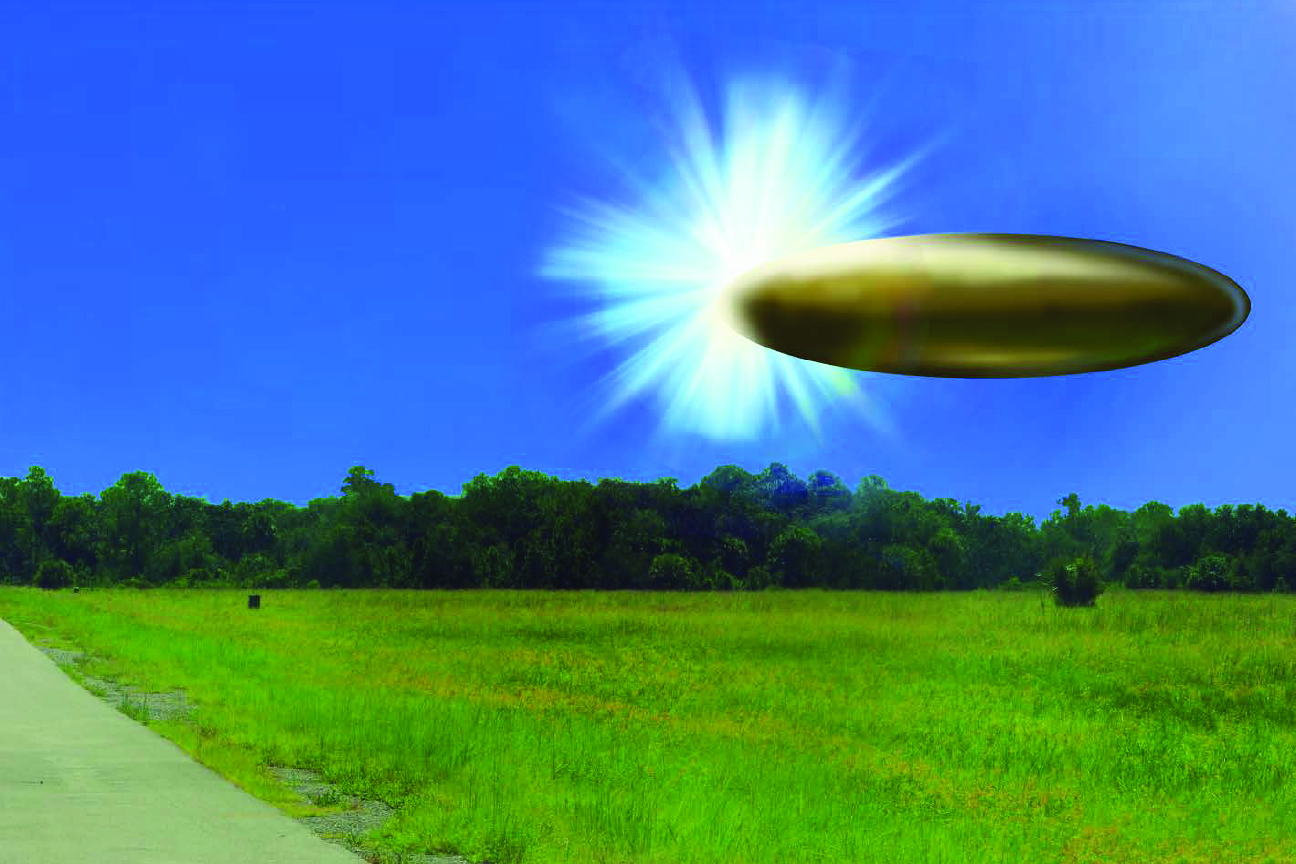
The United States government has announced a historic effort to declassify and release files related to unidentified flying objects (UFOs), extraterrestrial life, and Unidentified Anomalous Phenomena (UAPs), following a directive from Donald Trump calling for greater transparency on the matter. According to an official statement, the newly established Department of War, working alongside the Office of the Director of National Intelligence (ODNI), is leading a government-wide operation to identify, review, declassify, and publicly release records connected to unresolved UAP and UFO cases. "Based on the tremendous interest shown, I will be directing the Secretary of War, and other relevant Departments and Agencies, to begin the process of identifying and releasing Government files related to alien and extraterrestrial life, unidentified aerial phenomena (UAP), and unidentified flying objects (UFOs), and any and all other information connected to these highly complex, but extremely interesting and important, matters. GOD BLESS AMERICA!" said, President Donald J. Trump on February 19, 2026. In a statement cleared for release on May 8, 2026, Pete Hegseth said the release reflects the administration’s commitment to what he described as “unprecedented transparency” regarding the government’s understanding of UAPs. The Department of War stated that files will be released gradually in rolling batches over the coming weeks as more documents are reviewed and declassified. The agency also encouraged researchers and private-sector experts to analyze the released materials, suggesting that outside expertise may help interpret unresolved cases. The announcement has reignited public debate surrounding the existence of extraterrestrial life and the nature of unexplained aerial sightings. While the government has not confirmed the existence of aliens, the release of previously classified documents is expected to intensify global interest in UAP investigations and national security-related aerial phenomena. Pi Insight: For decades, UFOs existed mostly in speculation, conspiracy theories, and science fiction. Now, governments are beginning to treat unexplained aerial phenomena as matters worthy of public disclosure and scientific investigation. The biggest revelation may not be proof of aliens—but the acknowledgment that there are still phenomena humanity does not fully understand. Visit the US Department of War to Read More Image Source: US Department of War

Read Insight
AI Uncovers 100+ Hidden Planets in NASA Data
Space Tech May 03, 2026

AI Uncovers 100+ Hidden Planets in NASA Data

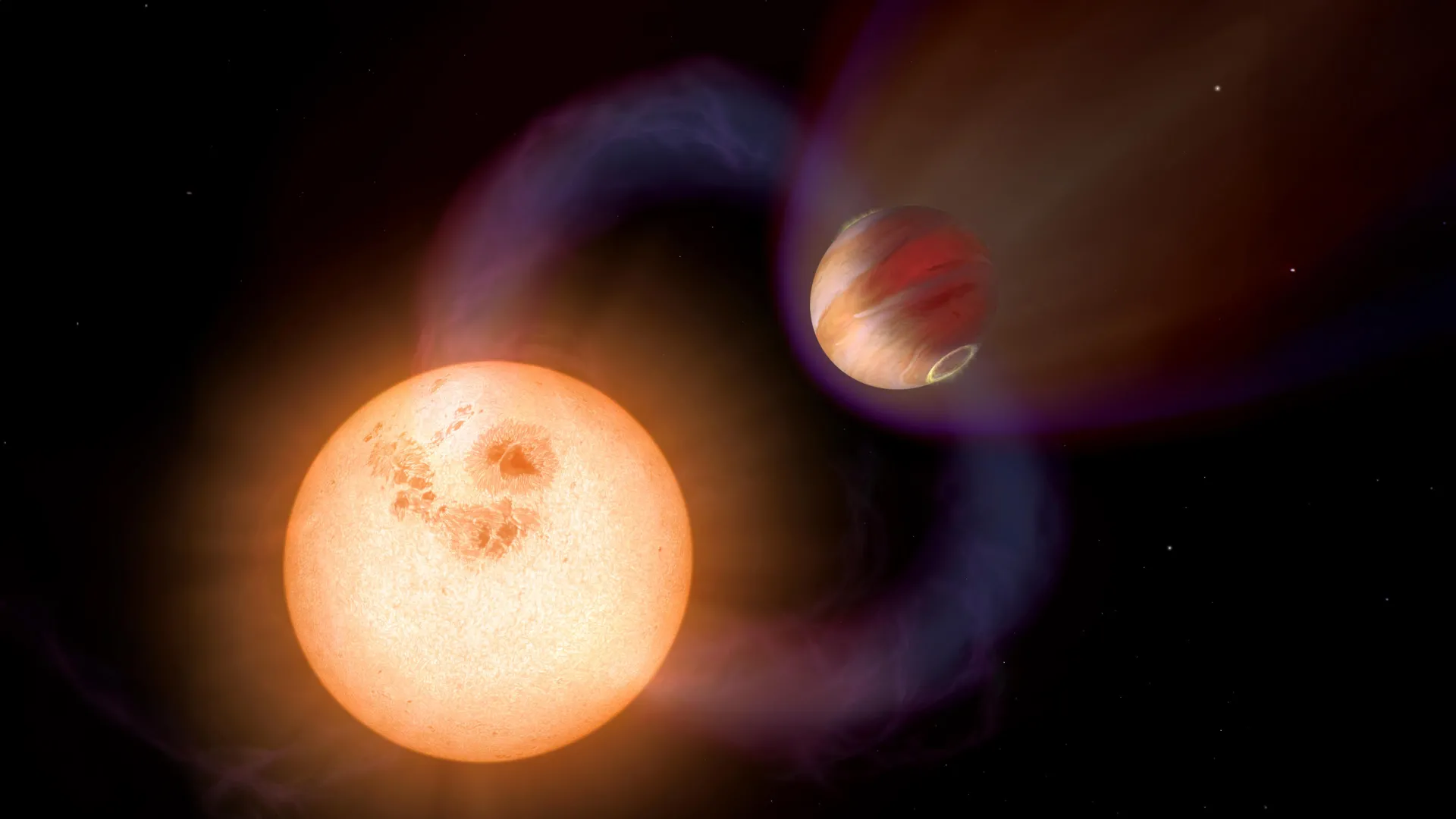
A powerful artificial intelligence tool called RAVEN has discovered more than 100 previously hidden planets buried within decades of space data from NASA's TESS mission, revealing rare and extreme worlds that had gone unnoticed by traditional analysis. NASA's Transiting Exoplanet Survey Satellite (TESS) is an Explorer-class planet finder designed to discover thousands of exoplanets by surveying the entire sky for periodic dips in star brightness, known as transits. Unlike its predecessor Kepler, which focused on distant stars in a small patch of sky, TESS targets the brightest stars closest to Earth, making its discoveries ideal for detailed follow-up studies of planetary masses, densities, and atmospheric compositions by telescopes like the James Webb Space Telescope. Launched in 2018 and led by MIT, the mission operates from a unique, highly elliptical 13.7-day orbit, providing an unobstructed view that has already identified thousands of planet candidates ranging from small, rocky worlds to massive gas giants. According to ScienceDaily, RAVE, "by analyzing millions of stars . . . has confirmed over 100 exoplanets, including 31 brand-new worlds, and identified thousands of more promising candidates. What makes this especially exciting is the discovery of rare and extreme planets, like those that whip around their stars in less than a day and those lurking in the mysterious 'Neptunian desert' where planets are thought to be scarce." Unlike conventional methods, which rely heavily on manual verification and predefined detection rules, RAVEN can scan massive datasets far more efficiently and identify faint or unusual signals that humans might overlook. This has led to the identification of over 100 new exoplanet candidates, some of which fall into rare and extreme categories. Some discovered planets are located in environments previously thought unlikely to support planetary formation, while others challenge existing theories about how solar systems evolve. These findings expand the diversity of known worlds beyond what scientists had previously imagined. According to ScienceDaily, "RAVEN is an automated systems designed to address one of astronomy's biggest challenges, turning enormous volumes of space telescope data into reliable discoveries. It scans data from millions of stars to find the tiny drops in brightness caused by planets passing in front of them. The system then uses artificial intelligence trained on realistic simulations to filter out false signals such as binary stars or instrument noise, before statistically confirming the strongest candidates." "Importantly, RAVEN also evaluates which types of planets are easier or harder to detect, helping researchers correct for hidden biases. This means it also speeds up the discovery of new worlds but also produces cleaner, more reliable datasets that can be used to answer larger questions about how common different kinds of planets are across the galaxy." Pi Insight: The universe may already be mapped—but not yet understood. With AI, we are not just observing space—we are rediscovering it, uncovering hidden worlds that were always there, waiting to be seen. REFERENCES: NASA, ScienceDaily, Image Source: ScienceDaily

Read Insight
 The Dawn of the Space Tourism Era (April 2026)
Space Tech Apr 20, 2026

The Dawn of the Space Tourism Era (April 2026)

As of April 2026, space tourism has transitioned from a billionaire's vanity project into a burgeoning $1.3 billion industry. With a compound annual growth rate of over 28%, the "NewSpace" sector is currently witnessing a historic surge in flight frequency, technological breakthroughs in reusability, and a massive influx of both private and sovereign capital. Current Progress & 2026 Milestones The year 2026 is being hailed as "pivotal" for commercial space operations due to several high-profile successes: • Flight Frequency: Blue Origin and Virgin Galactic have scaled their operations, with flights now occurring on a near-monthly cadence. Blue Origin’s New Glenn rocket successfully reached orbit on its first attempt earlier this year, marking a new era for heavy-lift commercial tourism. • Artemis II Impact: The launch of NASA's Artemis II mission in early 2026—the first crewed lunar flyby in over 50 years—has reignited global public fascination, serving as a massive marketing catalyst for the private sector. • Infrastructure: Private space stations are moving from blueprints to hardware. Companies like Axiom Space and Voyager Space are actively developing modules to replace the aging ISS, specifically designed to house both researchers and tourists. The Road Ahead: Possibilities and Risks While the momentum is unprecedented, the industry faces three critical "gravity wells": • Safety Regulation: As flight frequency increases, the statistical likelihood of an accident grows. Regulatory bodies are currently debating "informed consent" vs. "strict safety" standards for passengers. • Space Debris: The "Kessler Syndrome" remains a threat; the thousands of new satellites launched in 2025-2026 have made orbital traffic management a top priority for 2027. • Environmental Impact: Public scrutiny is rising regarding the carbon footprint of frequent launches, leading to a new investment trend in "Green Propulsion" and carbon-neutral spaceports. Visit Aero Center To Read More Image Source: Aero Center

Read Insight
Cybe Risks in Space Technology: A Growing Global Concern
Space Tech Apr 20, 2026

Cybe Risks in Space Technology: A Growing Global Concern

As space technology becomes increasingly integrated into global infrastructure, cybersecurity experts are raising alarms about a new and rapidly evolving threat landscape. Satellites, space stations, and mission control systems—once isolated and highly specialized—are now connected to broader digital networks, making them potential targets for cyberattacks. Recent developments in the space sector, including the expansion of satellite internet services and renewed lunar missions, have amplified concerns about the vulnerability of space-based systems. With billions of people relying on satellite-enabled services such as GPS, communications, and financial transactions, the stakes have never been higher. Worldwide Implications A successful cyberattack on space infrastructure could disrupt critical services on Earth. For example, interference with GPS signals could impact transportation systems, while compromised communication satellites could affect national security operations. Governments and private companies are increasingly recognizing the need to secure space assets against these threats. However, the complexity of space systems and the high cost of deployment make rapid security upgrades challenging. Building a Secure Space Future Efforts are underway to strengthen the cybersecurity of space systems. These include: • Developing secure communication protocols • Implementing AI-driven threat detection systems • Establishing international regulations and best practices Experts emphasize that cybersecurity must be integrated into the design phase of space technology, rather than treated as an afterthought.

Read Insight
Humanity Returns to Deep Space: Artemis II Orbits the Moon
Space Tech Apr 20, 2026

Humanity Returns to Deep Space: Artemis II Orbits the Moon

In a landmark moment for space exploration, Artemis II has successfully carried astronauts around the Moon and back—marking the first crewed lunar flyby since the historic Apollo 17 mission over five decades ago. Launched by NASA, Artemis II represents a bold step forward in humanity’s return to deep space, laying the groundwork for future lunar landings and long-term missions beyond Earth. Technology Meets Legacy Artemis II blends cutting-edge innovation with the legacy of the Apollo era. The Orion spacecraft, equipped with advanced life-support systems and navigation technology, demonstrated its capability to sustain human life far beyond low Earth orbit. The mission also tested the powerful Space Launch System (SLS), now considered one of the most capable rockets ever built. A New Era Begins The success of Artemis II signals a renewed era of space exploration—one driven not only by national ambition but also by international collaboration and commercial partnerships. As humanity once again looks toward the Moon, Artemis II reminds the world of what is possible when innovation, courage, and vision align beyond the boundaries of Earth. Image Source: NBC News | Astronomy Magazine

Read Insight