Browsing Category

Robotics

Ameca — Can Humanoid Robots Help Combat Loneliness?
Robotics Apr 29, 2026

Ameca — Can Humanoid Robots Help Combat Loneliness?

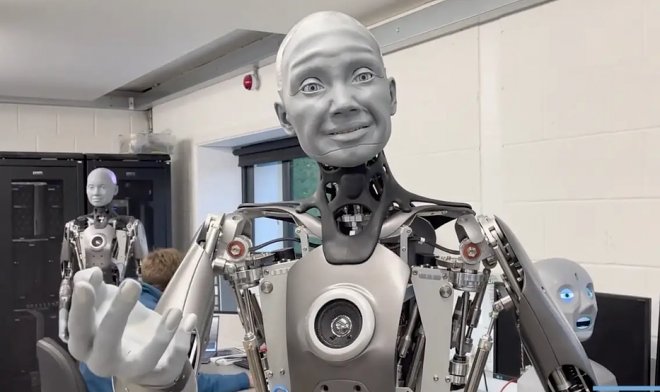
As the world’s population ages, loneliness among the elderly is becoming a growing concern. Now, humanoid robots like Ameca are being explored as part of a new solution—combining advanced robotics with emotional interaction to provide companionship and support. A Response to a Growing Problem Loneliness among older adults has been linked to serious health risks, including depression, cognitive decline, and even heart disease. In many parts of the world, families are becoming smaller and more geographically dispersed, leaving many elderly individuals without consistent social interaction. This has created a need for innovative solutions that go beyond traditional caregiving. A Robot That Feels… Human Developed by Engineered Arts, Ameca is designed to interact with humans in a remarkably natural way. What sets it apart is its ability to mimic human facial expressions and emotions with high precision. Through advanced motors and AI-driven systems, Ameca can smile, frown, show surprise, and maintain eye contact—creating a sense of presence that feels more human than mechanical. This capability allows Ameca to engage in conversations that are not just functional, but emotionally responsive. For elderly individuals, this can make interactions feel more meaningful, helping reduce feelings of isolation. Beyond Companionship While Ameca is not yet widely deployed in homes, its potential applications are being explored in healthcare and assisted living environments. The robot could: • Provide reminders for medication • Offer conversational engagement • Assist caregivers by monitoring well-being Its presence could help bridge the gap between human care and technological support, especially in regions facing shortages of healthcare workers. The Human Question Despite its promise, the idea of robots providing emotional companionship raises important questions. Can machines truly replace human connection? Some experts argue that while robots like Ameca can reduce loneliness, they should complement—not replace—human relationships. There are also concerns about emotional dependency and the ethical implications of machines simulating feelings they do not actually experience. A Glimpse into the Future The development of robots like Ameca reflects a broader shift in how technology is being used—not just for productivity, but for emotional and social support. As AI and robotics continue to advance, the line between human interaction and machine assistance is becoming increasingly blurred. Pi Insight Ameca does not feel—but it can make people feel less alone. In a world where loneliness is rising, the question is not just what technology can do, but how it can support the human need for connection without replacing it. Image Source: Maker Fiare Rome | Engineered Arts

Read Insight
The Tactile Leap: Tesla Unveils Optimus Gen 3 with Human-Grade Sensitivity
Robotics Apr 29, 2026

The Tactile Leap: Tesla Unveils Optimus Gen 3 with Human-Grade Sensitivity

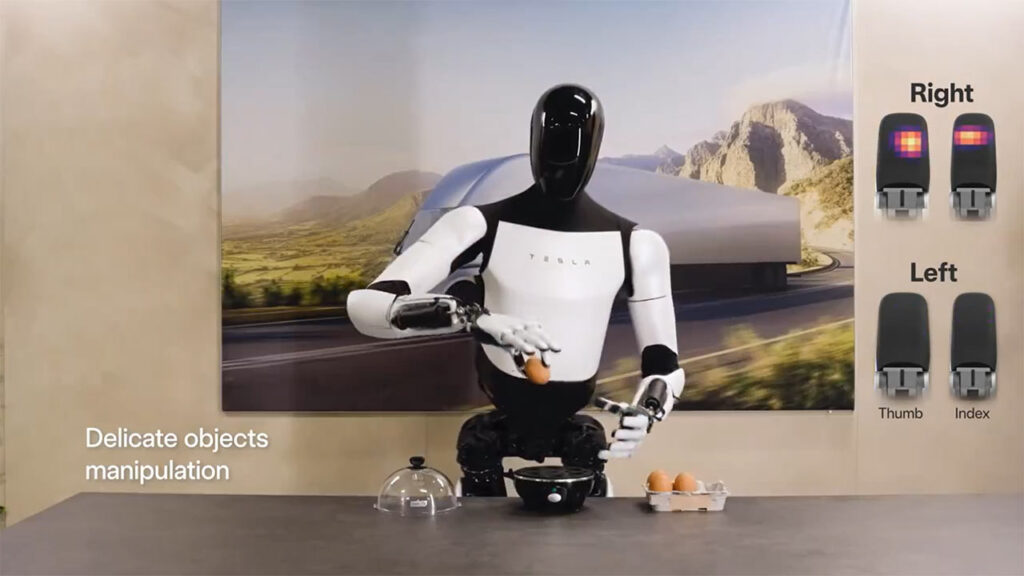
Breaking the boundary between robotic rigidity and human dexterity, Tesla has officially unveiled the third generation of its humanoid robot, Optimus. While previous iterations focused on balance and basic locomotion, Gen 3 introduces a revolutionary "tactile-intelligence" layer, featuring a proprietary sensor-integrated skin that allows the robot to feel pressure, temperature, and texture—a critical step toward deploying humanoid workers alongside human staff in Tesla’s global gigafactories. The Sensor-Integrated Skin: A New Sense of Touch The most significant upgrade in Gen 3 is the integration of tactile sensors across the robot's hands and forearms. Utilizing a flexible, multi-layered polymer "skin," Optimus can now perceive the world with a sensitivity that rivals human fingertips. During the reveal, Tesla demonstrated Gen 3 successfully handling fragile items—such as a raw egg and a thin-walled plastic cup—without the "crushing accidents" that plagued earlier autonomous grippers. This tactile feedback loop allows the robot to adjust its grip strength in real-time, enabling it to perform delicate assembly tasks that were previously reserved for human artisans. End-to-End Neural Training: Moving Beyond Code Unlike traditional robots that rely on hard-coded instructions for every movement, Optimus Gen 3 operates on an "end-to-end" neural network architecture similar to Tesla’s FSD v14. By observing thousands of hours of human movement via motion-capture and video data, the robot "learns" tasks through imitation. This has resulted in a 30% increase in movement fluidity. Observers noted that the "uncanny valley" of robotic walking has largely disappeared in Gen 3, as the AI now accounts for the micro-adjustments in weight distribution and momentum that define human grace. The 2026 Factory Deployment: From Lab to Line Tesla CEO Elon Musk confirmed that Gen 3 is no longer a research project. Thousands of units are currently being integrated into the production lines of Giga Texas and Giga Nevada. Their primary roles include: • Logistics and Sorting: Navigating complex warehouse environments to move parts between stations. • Repetitive Assembly: Handling high-precision tasks like threading delicate wiring harnesses. • Quality Inspection: Using high-resolution cameras and tactile sensors to detect microscopic flaws in vehicle body panels. The "Cost-Per-Hour" Disruption Tesla is targeting a production cost for Optimus Gen 3 that would eventually bring the "wage" of a robot down to approximately $3.00 per hour, including electricity and maintenance. In the 2026 economic landscape, this represents a tectonic shift for the manufacturing sector. While labor advocates raise concerns about displacement, Tesla argues that Optimus is designed to handle "the 3 Ds"—tasks that are Dull, Dirty, or Dangerous—allowing human workers to pivot toward "Augmented Intelligence" roles as system supervisors and creative problem-solvers. Safety and the "Socialized" AI Safety protocols have been deeply embedded into the Gen 3 firmware. Using a suite of ultrasonic and vision sensors, the robot maintains a "personal space" buffer, slowing its movements or stopping entirely when a human worker enters its immediate vicinity. Furthermore, a physical "E-Stop" is now integrated into the robot’s rear chassis, and a remote "kill-switch" via the Tesla Enterprise app allows supervisors to deactivate an entire fleet instantly if a network anomaly is detected. Optimus Gen 3 Technical Specs: Actuators: All-new integrated power units with 28 degrees of freedom in the body. • Hand Dexterity: 11 degrees of freedom with tactile feedback in every fingertip. • Processing: Dual Tesla-designed AI chips (redundant architecture). • Battery Life: 8–10 hours of active labor; autonomous wireless charging. • Connectivity: 5G/Starlink integrated for real-time fleet learning. Image Source: TeslaOracle |

Read Insight
Cyber-Transit: Tesla’s Robotaxi Network Goes Live Across the Texas Triangle
Robotics Apr 27, 2026

Cyber-Transit: Tesla’s Robotaxi Network Goes Live Across the Texas Triangle

In a milestone for autonomous transportation, Tesla has officially launched its dedicated Robotaxi service across the major metropolitan hubs of Austin, Dallas, and Houston. This "tri-city" rollout marks the first time a fully driverless, steering-wheel-free fleet has been deployed at scale without human safety drivers, moving Elon Musk’s long-promised "Cybercab" vision from the realm of venture speculation into a daily utility for millions of Texans. The Unboxed Revolution: Scaling the Fleet The rapid deployment of hundreds of vehicles across Texas was made possible by Tesla’s proprietary "Unboxed" manufacturing process. Unlike traditional automotive assembly lines, this method builds sub-assemblies of the vehicle simultaneously before a final "single-stitch" marriage of the components. This has reportedly reduced production costs by 40% and halved the factory footprint, allowing Tesla to saturate the Texas market with dedicated two-seater autonomous vehicles in a fraction of the time required by competitors. Autonomous Navigation in the Lone Star State Operating on the latest version of Full Self-Driving (FSD) "v14," the Robotaxi fleet relies entirely on vision-based AI. Unlike rival services that utilize expensive LiDAR sensors and pre-mapped "geo-fences," Tesla’s fleet navigates using a neural network trained on billions of miles of real-world driving data. This "general intelligence" approach allows the taxis to handle the complex, multi-lane highway interchanges of Dallas and the unpredictable urban construction of Houston with a level of fluidity that engineers describe as "human-like." Economic Disruption: The End of the "Green Premium" Tesla is positioning the service as a direct competitor to traditional ride-sharing and even public transit. By eliminating the cost of a human driver and leveraging the high efficiency of the "Cybercab" platform, the company is targeting a price point of $0.30 to $0.40 per mile. This aggressive pricing strategy is aimed at eliminating the "green premium" usually associated with premium electric transit, making autonomous EVs the most affordable transportation option in the state. Regulatory Scrutiny and Safety Concerns The rollout has not been without its detractors. While Texas has historically maintained a "pro-innovation" regulatory stance, the National Highway Traffic Safety Administration (NHTSA) is closely monitoring the expansion. Critics point to the inherent risks of a purely vision-based system, particularly in heavy rain or low-light conditions common during Houston’s storm seasons. Tesla has countered these concerns by citing internal data suggesting that its autonomous fleet is currently 5.5 times safer than the average human driver in the state of Texas. The 2026 Transit Paradigm The Texas launch is being viewed as a "stress test" for the future of global urban design. As parking lots in downtown Austin begin to transition into pick-up and drop-off zones, urban planners are watching to see if the convenience of Robotaxis will lead to increased traffic congestion or a total "de-privatization" of car ownership. For now, the sight of the gold-hued, wing-doored vehicles navigating the streets of the Texas Triangle has become the defining image of the 2026 transportation landscape. Launch Breakdown: • Service Areas: Austin, Dallas, Houston (The Texas Triangle) • Vehicle Model: Tesla Cybercab (Dedicated Autonomous) • Estimated Cost: $0.35 per mile • Technology: Vision-only FSD v14 (No LiDAR) • Manufacturing: "Unboxed" modular assembly Image Source : Robotaxi (Tesla)

Read Insight
Robot Wins Half Marathon Race in China
Robotics Apr 20, 2026

Robot Wins Half Marathon Race in China

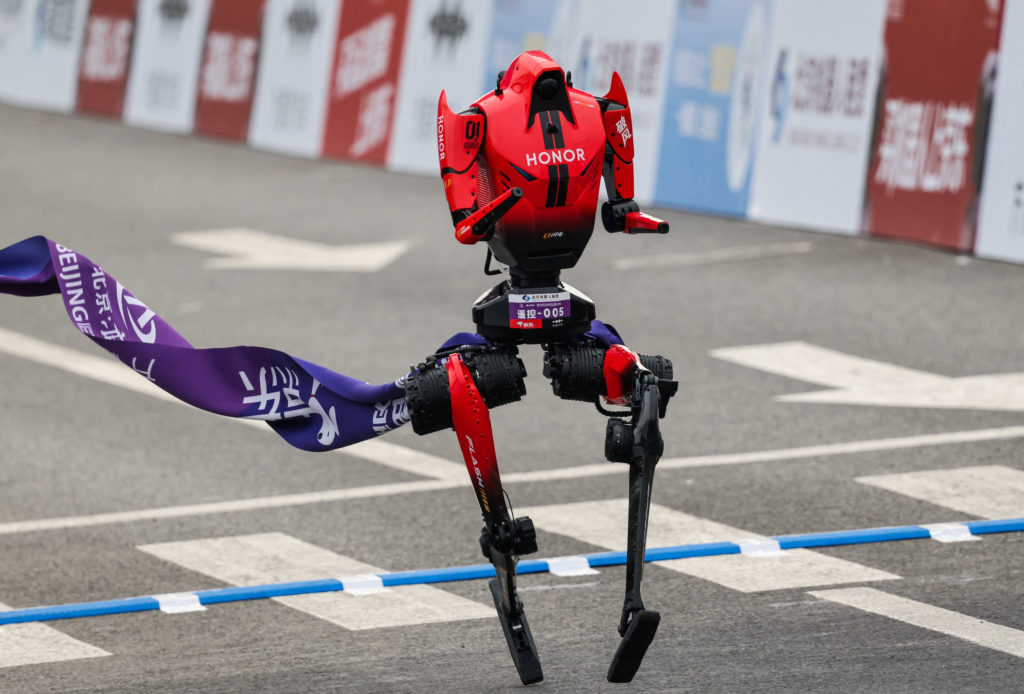
In a groundbreaking moment for robotics and artificial intelligence, a humanoid robot has reportedly outperformed human runners in a half marathon race held in China—signaling a major leap forward in machine mobility and endurance. The event, organized as part of a national technology showcase, featured both human participants and advanced humanoid robots developed by leading Chinese research institutions. While the race initially aimed to demonstrate progress in robotics, it quickly turned into a historic milestone when one robot completed the 21-kilometer course faster than many of its human counterparts. More Than Just Speed Experts say the real achievement isn’t just that a robot ran a half marathon—it’s how it did it. The robot’s ability to sustain movement over long distances without significant error highlights major improvements in: • Battery efficiency • Mechanical durability • Autonomous navigation This development could have far-reaching implications beyond sports, especially in industries that require long-duration physical tasks. A Glimpse Into the Future While the achievement is being celebrated, it also raises important questions about the future of human-machine interaction. As robots become more capable, discussions around ethics, job displacement, and regulation are expected to intensify.

Read Insight