The Sky-High Commute: Joby Aviation Launches First Point-to-Point Air Taxi Flights in NYC
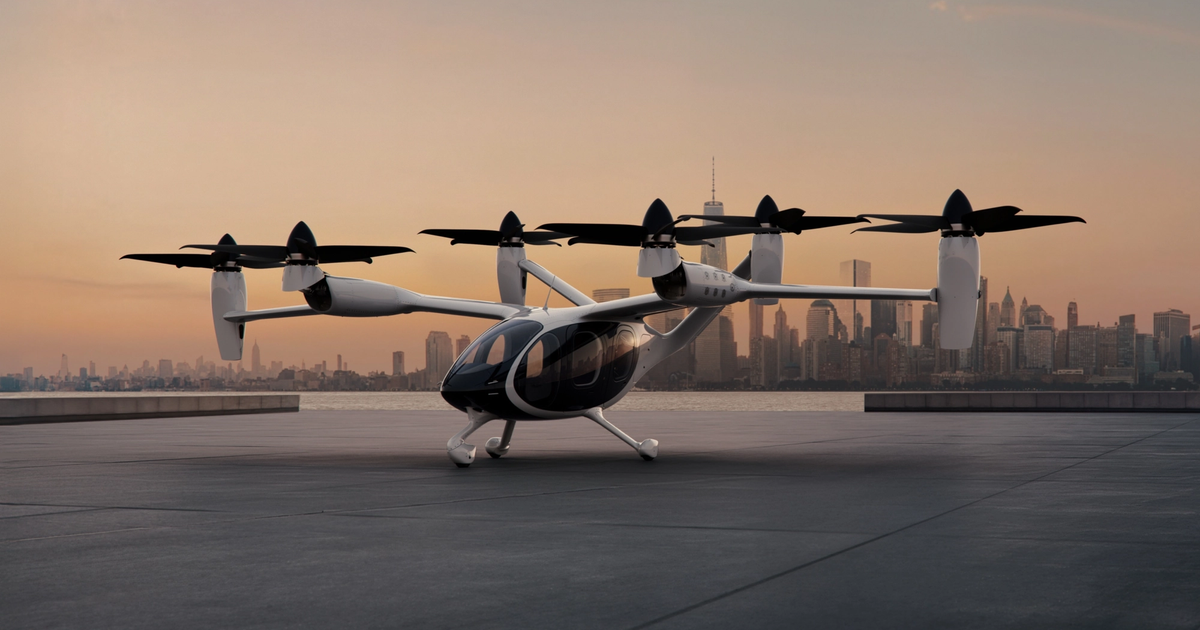
The iconic New York City skyline has a new permanent fixture. Joby Aviation has officially launched the city’s first point-to-point electric air taxi service, successfully navigating the most complex urban airspace in the world. As of May 2026, the quiet hum of electric vertical take-off and landing (eVTOL) aircraft is becoming a common sound over the Hudson and East Rivers, marking the commercial debut of Advanced Air Mobility (AAM) in a move that promises to turn a grueling hour-long airport trek into a seven-minute aerial skip. Navigating the "Concrete Jungle" Airspace Launching in New York is the ultimate stress test for any aviation firm. Joby’s fleet must operate within a dense "flight corridor" that includes heavy commercial traffic from JFK, LaGuardia, and Newark, as well as constant news and emergency helicopter activity. The success of the launch is credited to a new digital air traffic management system that uses real-time AI to de-conflict flight paths. "Operating in Manhattan isn't just about flying; it's about integration," says a Joby flight operations lead. "We are communicating with the tower and other aircraft at a frequency that traditional radio couldn't handle, using encrypted data links to ensure every take-off and landing is synchronized with the city’s heartbeat." The "Quiet Revolution": Solving the Noise Problem For decades, the primary barrier to urban flight has been noise. Traditional helicopters generate a rhythmic "thumping" that is often the subject of intense local protest. Joby’s eVTOL aircraft, however, utilize six distributed electric propellers that can tilt to transition between vertical and forward flight. During recent acoustic testing in the Financial District, the aircraft was found to be nearly silent against the backdrop of ambient city noise. At a distance of 100 meters, the Joby craft registers at roughly 45 decibels—quieter than a typical conversation. This "stealth" profile has been the key to securing permits for new "Vertiports" located on existing rooftops and underutilized pier space, allowing the service to operate much closer to residential and business hubs than traditional helipads. Vertiports: The New Grand Central The infrastructure of 2026 NYC is being rapidly retrofitted to support the eVTOL ecosystem. The primary hub, located at the Downtown Manhattan Heliport, has been converted into a multi-modal Vertiport equipped with rapid-charging stations. These stations can replenish an aircraft’s battery in the time it takes to offload and onboard a new set of five passengers (roughly 5 to 10 minutes). Commuters can now book a "Joby" via a dedicated app, which integrates with the MTA and ride-share services to provide a seamless door-to-door experience. A flight from Lower Manhattan to JFK International Airport, which can take over 90 minutes in Friday afternoon traffic, is now a consistent 7-minute flight priced at a premium—but increasingly competitive—rate of approximately $200 per seat. Economic Impact and the 'Aerial Ride-Share' Model The launch in New York is being watched as a blueprint for other global megacities like Tokyo, London, and Dubai. Joby’s business model—acting as both the manufacturer and the operator—allows for a level of service consistency that early "helicopter-sharing" startups lacked. Industry analysts predict that by late 2027, as the fleet scales and operational costs decrease, the price of a flight could drop to roughly $5 per mile, bringing it closer to the cost of a high-end Uber Black. This democratization of the sky is expected to drive a "De-urbanization" trend, as professionals realize they can live 50 miles outside the city and still have a "commute" that takes less time than a subway ride from Brooklyn. Safety and the Pathway to Autonomy While the 2026 flights are piloted by highly trained aviators, the aircraft are designed with "high-integrity" fly-by-wire systems that automate much of the complex physics of vertical flight. This serves as a safety buffer today and a bridge to a fully autonomous future tomorrow. Joby has emphasized that for the first two years of NYC operations, a "Human-in-the-Loop" remains mandatory to navigate the unpredictable nature of urban wind shear and bird strikes. As the first Joby craft touches down on the East River pier this afternoon, the message is clear: the third dimension of urban transport is no longer a luxury for the elite—it is the new frontier of the 2026 transit grid. Joby NYC Mission Specs: • Aircraft Type: 5-seat eVTOL (1 Pilot, 4 Passengers). • Max Speed: 200 mph. • Noise Profile:
Read Insight